Attention! The 33 finalists for the 2026 World Intellectual Property Organization (WIPO) Global Awards have been announced, with six Chinese companies from the environment, health, and information and communication technology (ICT) sectors making the shortlist. Behind their technological breakthroughs and intellectual property (IP) strategies lies a shared story: bringing Chinese innovation to the global stage. Ahead of the announcement of this year's winners, we interview representatives of the six Chinese finalists to explore how Chinese companies are leveraging IP strategies to deepen their integration into the global innovation ecosystem.
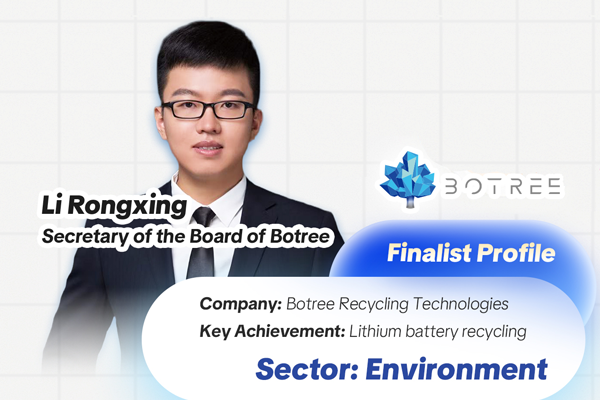
Q: What core technologies has your company developed in battery recycling?
Li: Botree is committed to providing end-to-end sustainable solutions for critical new energy materials. Through technological innovation and data-driven solutions, we have built a short-loop recycling system from battery recycling to material regeneration. To address different battery chemistries, we have developed two technical pathways. For ternary lithium batteries, we adopt a "material upgrading" approach, using our self-developed co-extraction mechanism to directly convert recovered metals into high-performance, high-energy-density battery materials, enabling the green manufacturing of cathode materials. For lithium iron phosphate (LFP) batteries, we apply a "material-to-material regeneration" approach, achieving a short-loop recycling process without relying on conventional pyrometallurgical or hydrometallurgical methods.
Our new co-extraction mechanism is one of our core technological innovations. Compared with conventional processes, it replaces the traditional "crushing-leaching-precipitation" workflow and enables the direct conversion of waste into battery-grade materials by shortening the extraction process by 50%, cutting equipment investment by over 30%, and lowering energy consumption by more than 10%.
Q: How has your company built an IP management system to support its global expansion?
Li: Botree has established a comprehensive IP management system covering the entire process from R&D and business operations to legal compliance. We implement a layered protection strategy that combines core patents, copyrights, and trade secrets to safeguard different types of innovation. As we expand internationally, IP has remained central to our global strategy. Through a diversified business model integrating technology services, production line sales, and operation and maintenance services, we maximize the value of our IP while ensuring our global IP portfolio evolves in step with overseas market expansion. According to data cited in the International Energy Agency's Battery Circularity (April 2026), Botree ranked second globally across three patent-related indicators in the battery recycling sector. To date, we have filed 149 patent applications, including 13 PCT international applications, and have been granted 42 invention patents across major global markets.
Being shortlisted among the 33 finalists for the 2026 WIPO Global Awards is an international recognition of our innovation capabilities and IP strategies. This further strengthens our confidence in leveraging IP to bring China's green technologies to the global market. We will continue advancing core battery recycling technologies and creating both economic and environmental value through IP and innovation.
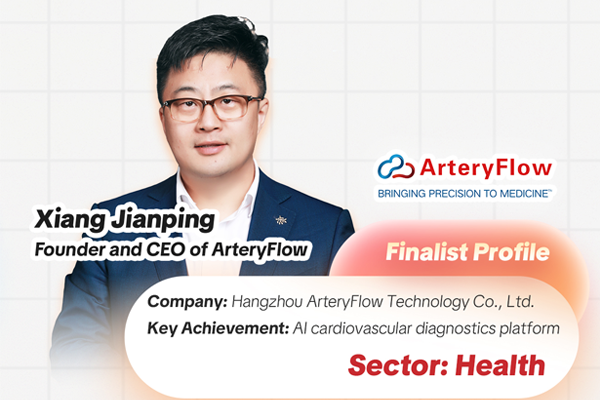
Q: What major achievements has your company made in intelligent cardiovascular and cerebrovascular diagnosis and treatment, and what clinical value have these innovations delivered?
Xiang: ArteryFlow specializes in providing intelligent diagnosis and treatment solutions for cardiovascular and cerebrovascular diseases. Our core product portfolio focuses on both coronary and intracranial diseases, supported by AI diagnosis and treatment systems covering disease screening, diagnosis, and surgical planning. Our self-developed innovations, including AccuFFRangio (Angiography-derived Fractional Flow Reserve) and AccuICAS (Intracranial Stenosis Functional Assessment), have filled gaps in intelligent cardiovascular and cerebrovascular diagnosis worldwide. Together, these products have obtained 21 regulatory approvals across China, the United States, and Europe. Built on extensive expertise in hemodynamics, AI, and clinical practice, our pioneering functional assessment technologies for intracranial stenosis have received approvals from China's National Medical Products Administration (NMPA), the U.S. Food and Drug Administration (FDA), and CE marking in Europe, reaching internationally leading standards. The technologies have been adopted by more than 600 hospitals across China.
Q: How has your company built an IP management system to support its global expansion?
Xiang: ArteryFlow has always regarded IP as our core strategic asset, embedding IP management throughout the entire business chain, from R&D and clinical research to regulatory registration and commercialization. In China, we leverage the patent fast-track examination system to secure timely legal protection for our innovations. Internationally, we follow the principle of "patents first, market entry second," building a multi-layered IP portfolio that combines foundational patents with application-specific patents around our core technologies. We also tailor our IP strategies to different markets while advancing IP protection in parallel with product registration. To date, we have filed more than 158 invention patent applications, with over 122 invention patents granted, and own 56 software copyrights and 70 registered trademarks worldwide. Being named among the 33 finalists for the 2026 WIPO Global Awards is a strong recognition of our innovation capabilities and IP strategy. Moving forward, we will continue strengthening our core technologies and global IP portfolio to bring China's original intelligent diagnostic technologies to more patients around the world.
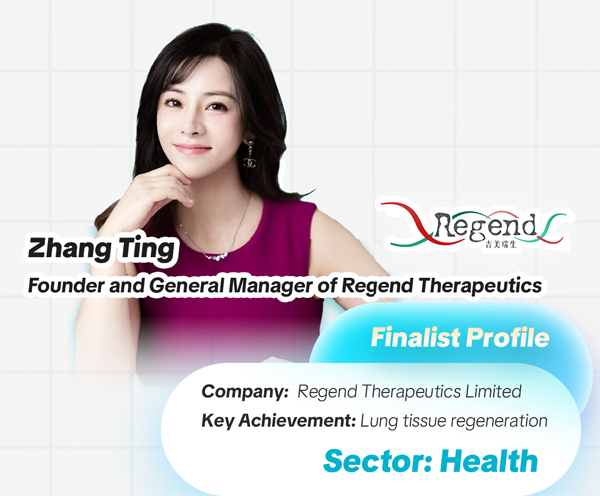
Q: What are the core principle and key advantages behind your lung regenerative therapy?
Zhang: Regend Therapeutics' self-developed autologous lung progenitor cell therapy, an innovative therapy for emphysema-dominant chronic obstructive pulmonary disease (COPD), has demonstrated favorable safety and efficacy. The therapy works by isolating healthy airway basal stem cells from patients, expanding them using our innovative R-Clone epithelial stem cell cloning technology, and precisely infusing them back into the damaged lung tissue via bronchoscopy, which promotes lung tissue regeneration and functional recovery. Our R-Clone technology innovatively combines a supportive feeder cell system with a chemically defined, small-molecule cocktail medium, accurately recapitulating the in vivo niche microenvironment without genetic modification. As of May 2026, nearly 200 patients had received the therapy at the Boao Lecheng International Medical Tourism Pilot Zone in Hainan Province. Meanwhile, our company has also expanded our business into kidney regeneration, with our product for diabetic kidney disease now in Phase I clinical trials. In addition, we are advancing universal stem cell products and second-generation rejuvenated stem cell technologies to further unlock the potential of regenerative therapies for multiple organs.
Q: Given the long development cycle and high technical barriers in stem cell therapies, how has your company built its IP strategy?
Zhang: Since its founding, Regend Therapeutics has regarded IP as the cornerstone of its business strategy. We have established a comprehensive IP protection system that combines patents, trademarks, and trade secrets, covering key areas including cell culture technologies. To date, we have been granted 13 patents and have filed three PCT international patent applications, building a solid technological foundation. Internationally, we have established collaborations with institutions in Spain, the Republic of Korea, and other countries and regions, while leveraging our IP portfolio to accelerate our global commercialization. Being named among the 33 finalists for the WIPO Global Awards recognizes the innovation, international competitiveness, and clinical value of our patented technologies. It has also strengthened our commitment to advancing technological innovation and bringing China's regenerative medicine breakthroughs to benefit more patients worldwide.