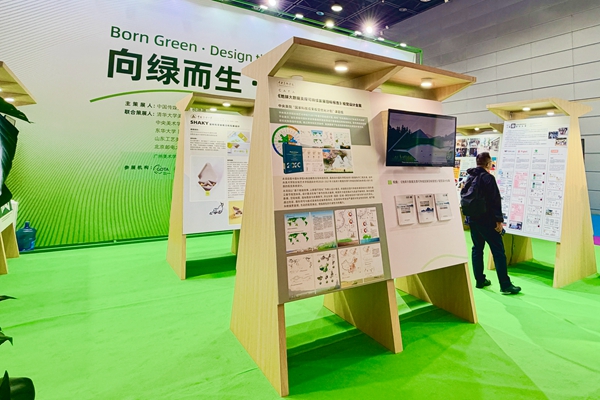
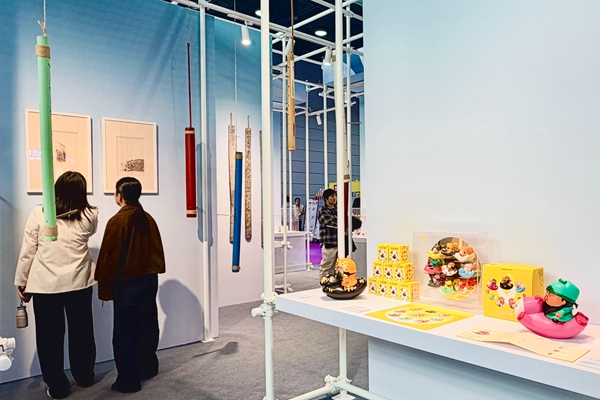
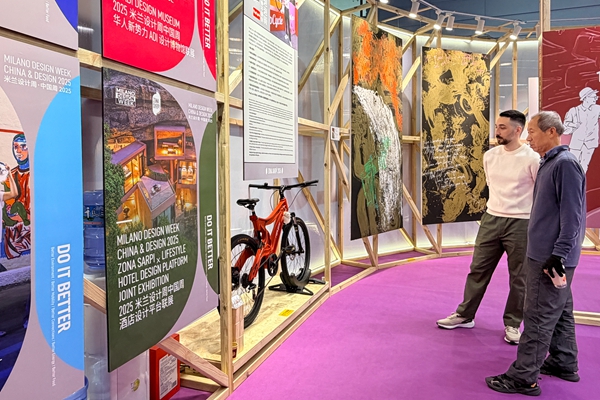
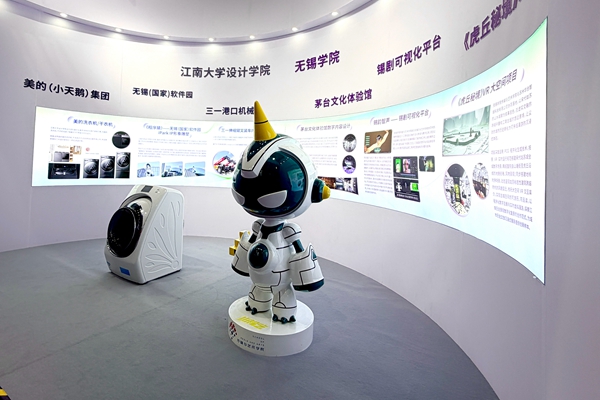
Design is where ideas begin to take shape and become reality. From the spark of inspiration to finished products, and from aesthetic expression to market value, design opens up endless possibilities for innovation and creativity. Intellectual property (IP), in turn, safeguards original designs and helps creative ideas translate into tangible value. At the 15th China International Patent Fair (CIPF), design drew attention for its unique role in connecting technological innovation, industrial development and cultural exchange. China Intellectual Property News (CIPN) spoke with three foreign design professionals from different fields at the fair to hear their insights and experiences in design, creativity and IP.
"A successful IP system protects creators while helping good ideas reach society"
Ulrich Weinberg, President of Global Design Thinking Alliance (GDTA)

Great design creates value on several levels. It makes products and services more useful, understandable and desirable; it can also express a distinctive identity and strengthen a company's position in the market. At the same time, every new solution builds on existing knowledge, technologies, cultural influences and the work of others. This means that IP systems must achieve two goals that can appear contradictory: rewarding originality while allowing ideas to circulate, inspire and be developed further. A successful IP system protects creators while helping good ideas reach society.
Generative AI can now contribute to research, visualization, prototyping and the exploration of ideas at unprecedented speed. The decisive question is no longer simply "What can this technology do?" but rather "What should we create, for whom, and why?" This is where design thinking becomes more relevant than ever. It can serve as an operating system for this transformation: a shared approach that helps organizations move from technology-driven experimentation to genuinely human-centered innovation in the age of AI.
China has made remarkable progress in its capacity to turn technology and design into products and services at scale. Through my work with Communication University of China over the past 20 years, I have witnessed enormous growth in the potential for creativity in connecting technological expertise with human-centered design, social research, communication and education.
I encourage Chinese designers and companies to invest as seriously in understanding people as they do in technology, build interdisciplinary and international partnerships, and treat IP strategically — protecting their own contributions, respecting the rights of others, and using licensing and collaboration to create new opportunities.
This is why I believe the GDTA's growing dialogue with Chinese universities and innovators is so important. The future of innovation will depend on our ability to connect different forms of intelligence, expertise and cultural backgrounds — and to do so with people at the center.
"Creative ideas often come from close observation combined with personal experience"
Shady Al Zayat, Founder of PopCycle

China's innovation ecosystem offers foreign entrepreneurs access to strong manufacturing know-how, a large pool of skilled talent, and suppliers who can turn a concept into a working product quickly. The first thing that attracted me to China was its supply chain. When developing a new product concept, I could source materials and components delivered within one or two days, which makes a real difference when testing ideas.
One of the biggest advantages I found is that many Chinese cities specialize in particular industries, with relevant knowledge and talent concentrated in those areas. This made it easier to find suppliers with the expertise my project required.
Safety was another major factor. Having lived in several countries where I often felt unsafe, I appreciate the sense of security in China, which allows me to focus on my goals and daily work. AI tools have also given me access to fast, accurate, and natural-sounding translations, helping me communicate independently from the start.
Creative ideas often come from close observation combined with personal experience. During my time in China, I noticed how strong the cycling culture was and how popular designer toys had become. My earlier hands-on experience in the polymer industry had shown me how polymers can replace conventional materials across many industries, so the connection came naturally. This led to PopCycle, a product that combines the functionality of a bicycle with the emotional, cultural, and collectible appeal of designer toys.
The Chinese government has committed to providing equal IP protection for domestic and foreign enterprises, while strengthening IP protection in cases involving foreign parties. The number of patent applications filed by foreign applicants in China has also continued to increase. This encouraged me to file for patents and protect my innovations in China. After completing the design of PopCycle, I immediately applied for a Chinese design patent to protect the product's appearance. The process was smooth and straightforward. I would welcome the opportunity to expand my existing collaborations with Chinese companies and work with Chinese designers on future products.
"IP is a mechanism for building trust, encouraging investment and transforming ideas into practical results"
Michele Brunello, Founder of DONTSTOP Architettura

In my curatorial work at the Venice Architecture Biennale, I have focused particularly on how Chinese design reinterprets history, communities and public spaces amid rapid development. Today, the world should pay attention not only to China's new buildings and products, but also to its experience in urban regeneration, digital lifestyles, sustainable materials and community participation. These practices can offer valuable inspiration to many cities undergoing transformation.
At Zona Sarpi, we have sought to transform historical memory into public spaces through projects ranging from the temporary gateway installation and the visual narrative celebrating one hundred years of Milan's Chinese community to the Matteo Ricci project, "A Bridge Between Civilizations."
Our experience shows that urban regeneration should involve residents, local businesses, designers, universities and public institutions from the very beginning. Temporary installations allow us to test ideas, build consensus and prepare the ground for permanent projects, such as the future gateway to the neighborhood. It is equally important to clearly document and protect authorship, the origins of creative ideas and how works may be used.
IP is not only a means of protecting designs but also a mechanism for building trust, encouraging investment and transforming ideas into practical results. Designers are more willing to participate in international cooperation when they understand how their concepts, drawings, visual identities and works will be used.
China has exceptional manufacturing capabilities, advanced digital technologies and diverse application scenarios, while Italy has a rich design culture, important craft traditions and extensive experience in urban regeneration. The two countries can develop further cooperation in joint design, sustainable materials, public spaces, design education and the commercialization of creative achievements.
Through Zona Sarpi, the upcoming Tsinghua University Art Museum Art & Technology Week and joint China-Italy innovation platforms, we hope to bring together universities, designers, companies and IP institutions. Our goal is to ensure that the best ideas can be protected, produced and meaningfully integrated into cities and people's everyday lives.